Book Review: What's Our Problem? by Tim Urban
"This is not a book about what to think. It’s a book about how to think." — Tim Urban
A Personal Note Before We Begin
None of what follows is intended as a political statement. What drew me to this book, and what stayed with me most deeply, was not its critiques of left or right, but its framework for thinking clearly. Tim Urban's concept of high rung vs. low rung thinking gave me a mental model that I now find myself using daily. We are all pulled into low rung thinking. The news cycle, social media, our own biases - they drag us down the ladder. My hope is that this book helps me better recognize when that happens, and gives me the language and awareness to climb.
An Overview of the Book
Tim Urban’s What’s Our Problem? is a sprawling, deeply illustrated, and at times humorous deep dive into why modern societies feel so broken, and how we might fix them. Framed as a self-help book for societies, it combines Urban’s signature stickfigure visuals and blog-style storytelling (from his site Wait But Why) with a serious examination of how tribalism, ideological rigidity, and a breakdown in shared narratives are eroding our ability to function well together.
The book is divided into several major chapters, visualized as part of a conceptual spiral:
The Ladder (Chapter 1) introduces the idea of mental elevation—from our primitive, reactive selves at the bottom to our high rung, rational selves at the top. Politics on the Ladder (Chapter 2) explores how our thinking affects political behavior. The Downward Spiral (Chapter 3) documents how societies fall into low rung groupthink. Rise of the Red Golem and Social Justice, High and Low (Chapters 4 and 5) explore left and right wing ideological traps. How to Conquer a College and How to Conquer a Society (Chapters 6 and 7) apply these ideas to real world institutions and systems.
Each chapter is paired with vivid graphics, available on his website and compiled in a 46 image PDF, that reinforce the narrative in visually sticky ways. From the iconic "Ladder" diagram (page 5 of the PDF) to the idea of "golems" vs. "genies" in cultural systems (page 11), Urban builds a clear visual language around abstract societal problems.
The Ladder: A Framework for Thinking
For me, the most memorable and resonant metaphor is the Ladder. It depicts the mental continuum between the Primitive Mind (reactive, emotional, tribal) and the Higher Mind (rational, curious, self-aware). Where you are on the ladder isn't fixed; it's a moment-to-moment position.
High rung thinking is characterized by truth seeking, fair play, humility, and persuasion. Low rung thinking is dogmatic, self righteous, tribal, and coercive. It’s a model that maps not just individuals, but media, institutions, and even entire ideologies.
Urban also maps this ladder onto political discourse: people and ideas can live at different rungs, and the health of a democracy depends on the elevation of our discourse. We don't need everyone to agree, but we do need them to think well.
Horizontal vs. Vertical Thinking
Urban introduces a second axis alongside the ladder: the horizontal spectrum (left vs. right politics) and the vertical spectrum (high vs. low rung thinking). This matrix changes the conversation: it’s not left vs. right, it’s up vs. down. Both sides of the political spectrum have high rung and low rung manifestations.
This was one of the most valuable takeaways from the book. I consider myself inclined toward high rung thinking. Not as a badge of honor, but as an aspiration. I appreciated how Urban aligned high rung thinking with scientific reasoning - holding beliefs loosely, updating ideas with evidence, and seeking dialogue over dogma. The goal is not certainty; it’s clarity and humility.
Golems and the Rise of Tribal Power
One of Urban’s most powerful metaphors is the Golem: a low rung collective entity formed by tribal fervor, ideological rigidity, and emotional reactivity. A golem is the opposite of a "genie," which represents highrung collaborative intelligence.
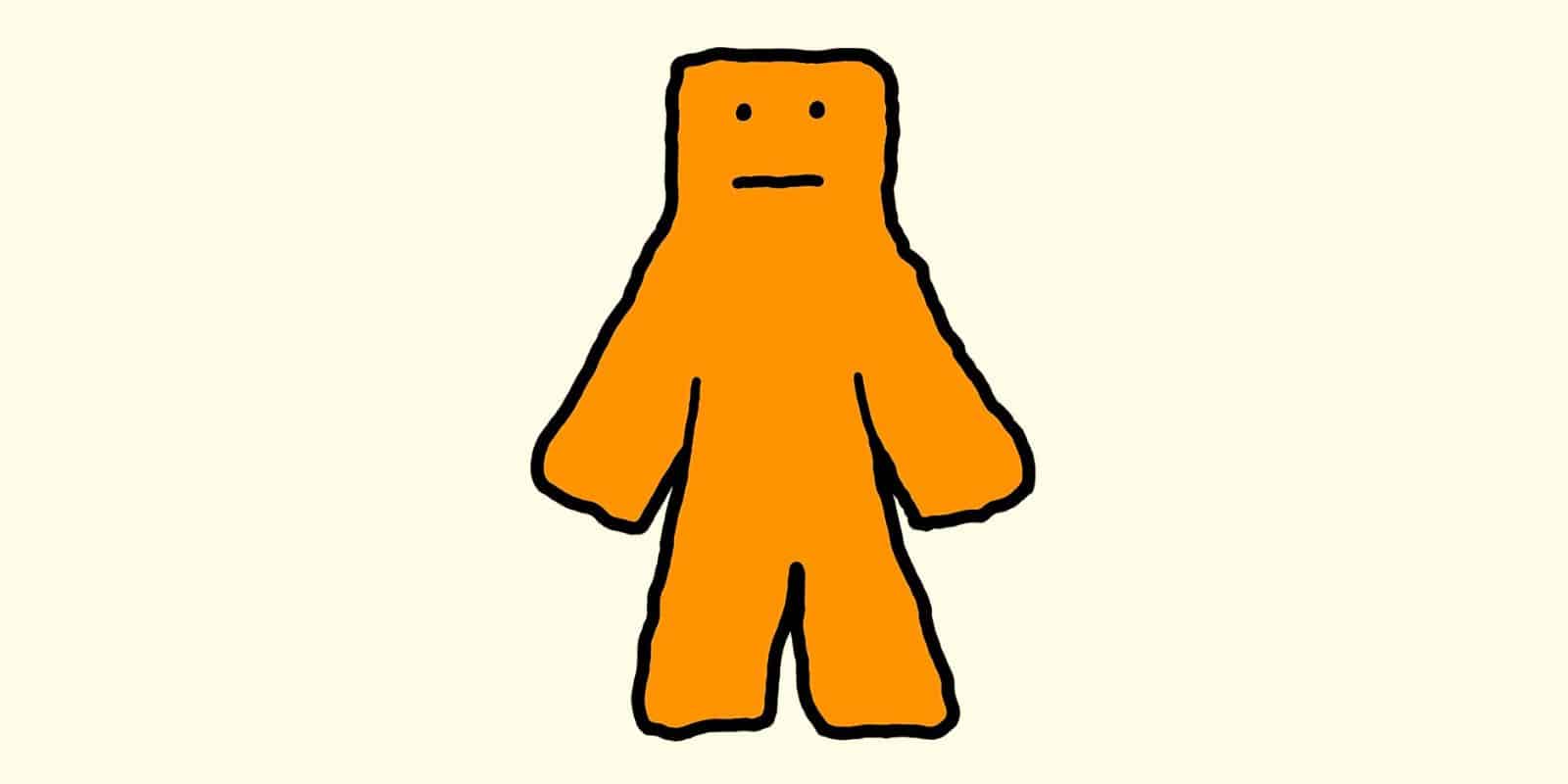
Right now, it feels like golems are dominating the cultural landscape. Whether from the far left or the far right, we see loud, rigid, moralizing collectives who demand conformity and crush dissent. Social media is their primary enabler. Just spend five minutes on Twitter/X and you'll see this in action: performative outrage, dunking, purity tests, and tribal signaling. It’s golem playground.
These dynamics don't just skew public conversation—they flatten nuance and punish curiosity. When people are afraid to ask questions or express doubt, we lose the very thing that keeps societies flexible and adaptable.
The Thought Pile and Speech Curve
Urban’s Thought Pile and Speech Curve model helps explain how culture becomes distorted. A healthy society has alignment between what people think and what they say. But when certain views become unspeakable, the Speech Curve distorts. This leads to false consensus and brittle institutions.
In an age where virality favors emotional extremes, the incentives for dishonesty are stronger than ever. It’s not hard to see how this plays out in real time. Take, for example, recent coverage of the ICE protests in Los Angeles: one could scroll their feed and, depending on who they follow, come away with completely different understandings of the same event. Each version confirmed by selective anecdotes, curated outrage, and algorithmic reinforcement.
Confirmation bias has always been a danger. But today, it’s supercharged by algorithms. That makes it even more important to stop, check ourselves, and (as Urban would say) climb the ladder.
Social Justice Fundamentalism: The Core Concern
Perhaps the most controversial (and for me, clarifying) portion of the book is Urban's analysis of Social Justice Fundamentalism (SJF). He differentiates SJF from what he calls Liberal Social Justice. The former he characterizes as an illiberal, rigid belief system that tolerates no dissent and uses coercion, rather than persuasion, to spread.
This was the part that hit hardest for me. I've struggled in recent years to articulate my growing unease with certain activist tactics. As Urban says, the ideology itself isn't the problem. There are many ideological frameworks. The issue is the methods: the use of shame, loyalty oaths, and institutional capture to enforce conformity.
The quote that stuck with me: "SJF is not dangerous because it's far left. It's dangerous because it's low rung."
He’s not condemning progressivism. He’s condemning authoritarianism masquerading as moral certainty. That feels exactly like what I’ve observed, and often feel the need to be silent about, for fear of being misunderstood or misrepresented.
The same critique applies to the far-right golem, which Urban addresses with equal clarity. Low rung populism, religious fundamentalism, conspiracy driven rhetoric. These are equally dangerous when weaponized and reinforced by closed systems of thought. Both sides, when they fall to the bottom rungs, become more alike than different.
Final Thoughts
Urban closes with an appeal to optimism: we can fix our society. But it won’t happen by choosing sides or doubling down. It will come from climbing the ladder, choosing humility, seeking truth, and building a new culture of intellectual honesty.
This book gave me language, images, and frameworks for many things I’ve been sensing intuitively. It reinforced the importance of systems that elevate thinking rather than manipulate it. And it gave me a renewed commitment to operate from a higher rung, even when the tribal call of the lower rungs is loud.
Highly recommended. Not just as a diagnosis of what’s wrong, but as a hopeful guide to what could be right.
Comments ()